We’ve set a harmless trap
Who in their right mind signs up for a newsletter from a salt company in rural Alaska?
If you need salt, you buy it at the grocery store. You don’t give a random business your email address just to get updates on sea salt products.
But tens of thousands of people did exactly that.
A tiny salt harvester in Homer, Alaska, made its emails so delightfully unhinged, packed with personality, and gloriously unpredictable that people wanted to see what would land in their inbox next.
They didn't just sign up for the salt. They signed up for the joy.
But it wasn’t just laughs.
When Alaska Salt Co. co-owner Britni Siekaniec needed sales for payroll and some big bills, she sent an email to that list. Her audience showed up with their wallets.
Let’s crack open the welcome email and see exactly how she forged such a connection.
She hated newsletters. So she wrote one.
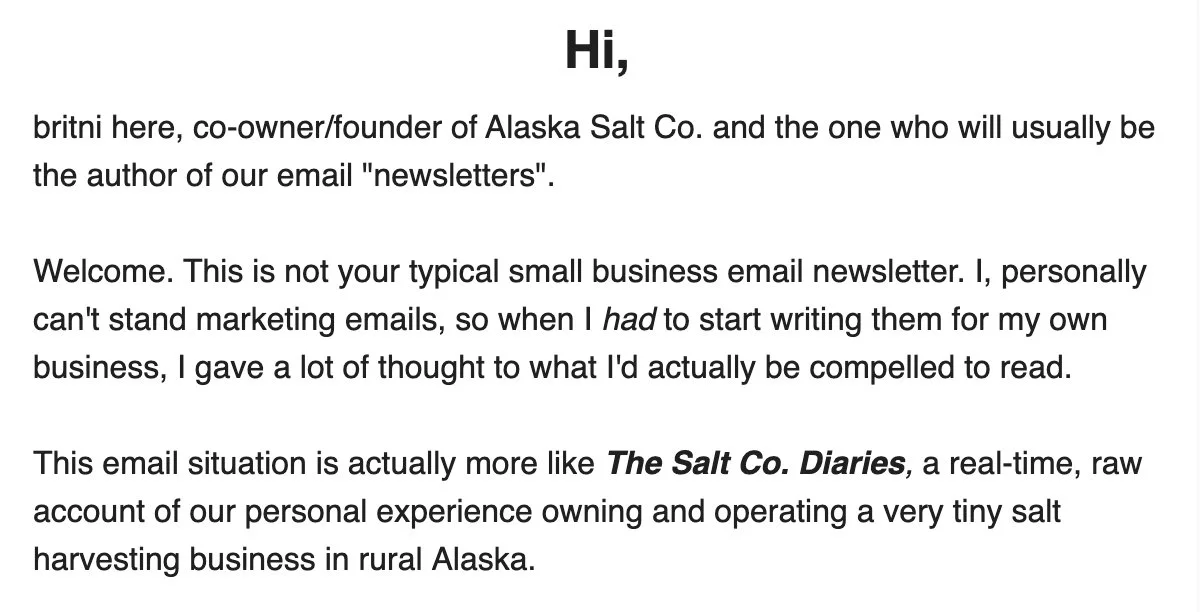
Britni opens by telling you she “can’t stand marketing emails.”
Then she tells you what she’s giving you instead: The Salt Co. Diaries, a “real-time, raw account” of running a tiny salt-harvesting business in rural Alaska.
You’re not signing up for another marketing blast. You’re being invited into a story.
Swear words, brutal honesty, and yes, they’d like your money.
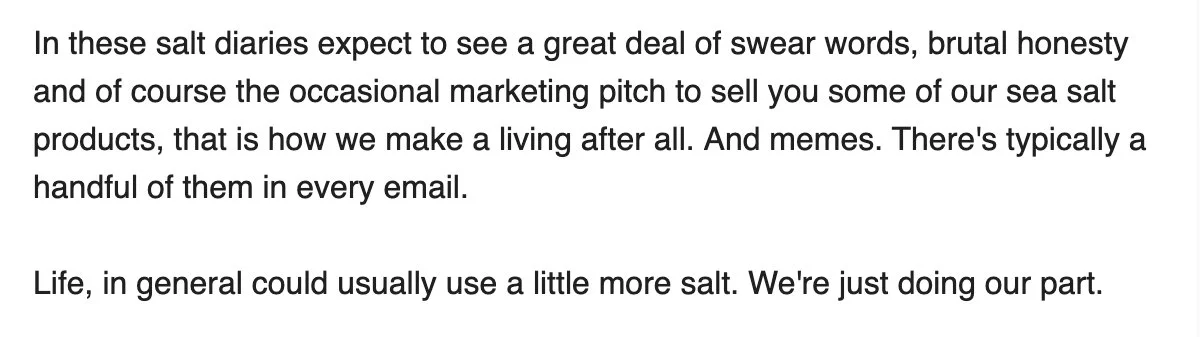
Britni lays out the deal: expect a great deal of swear words, brutal honesty, memes and the occasional attempt to sell you something.
And there it is: yes, this is a newsletter, and yes, eventually they’d like your money.
They just don’t see why that means the ride has to be boring.
Promise made. Homer delivered.
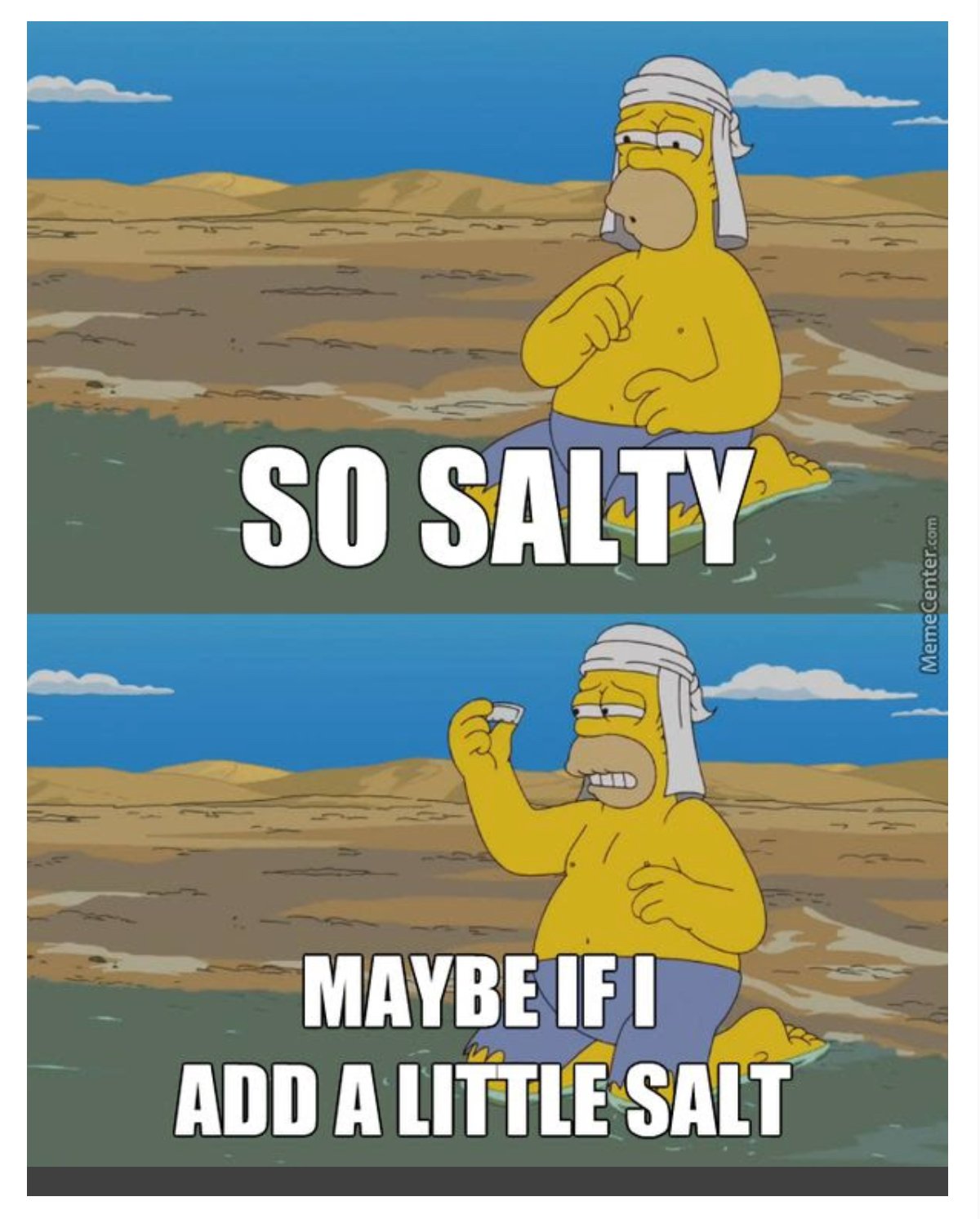
She promises memes. Then, almost immediately, Homer Simpson turns up, looking as though he has just discovered the secret ingredient to civilization: a little more salt.
And if you missed the geographical wink: Alaska Salt Co. is based in Homer, Alaska.
The sales pitch has a punchline.
Eventually, Britni gets around to the part where she would quite like you to buy something.
She describes the newsletter as “real” and “not at all ‘professional’ (fake-y),” then calls the offer a “harmless trap,” hoping for a “small business slam-dunk.”
Then comes one of the great acts of market segmentation: “If you eat food or take showers, we have something you’ll love.”
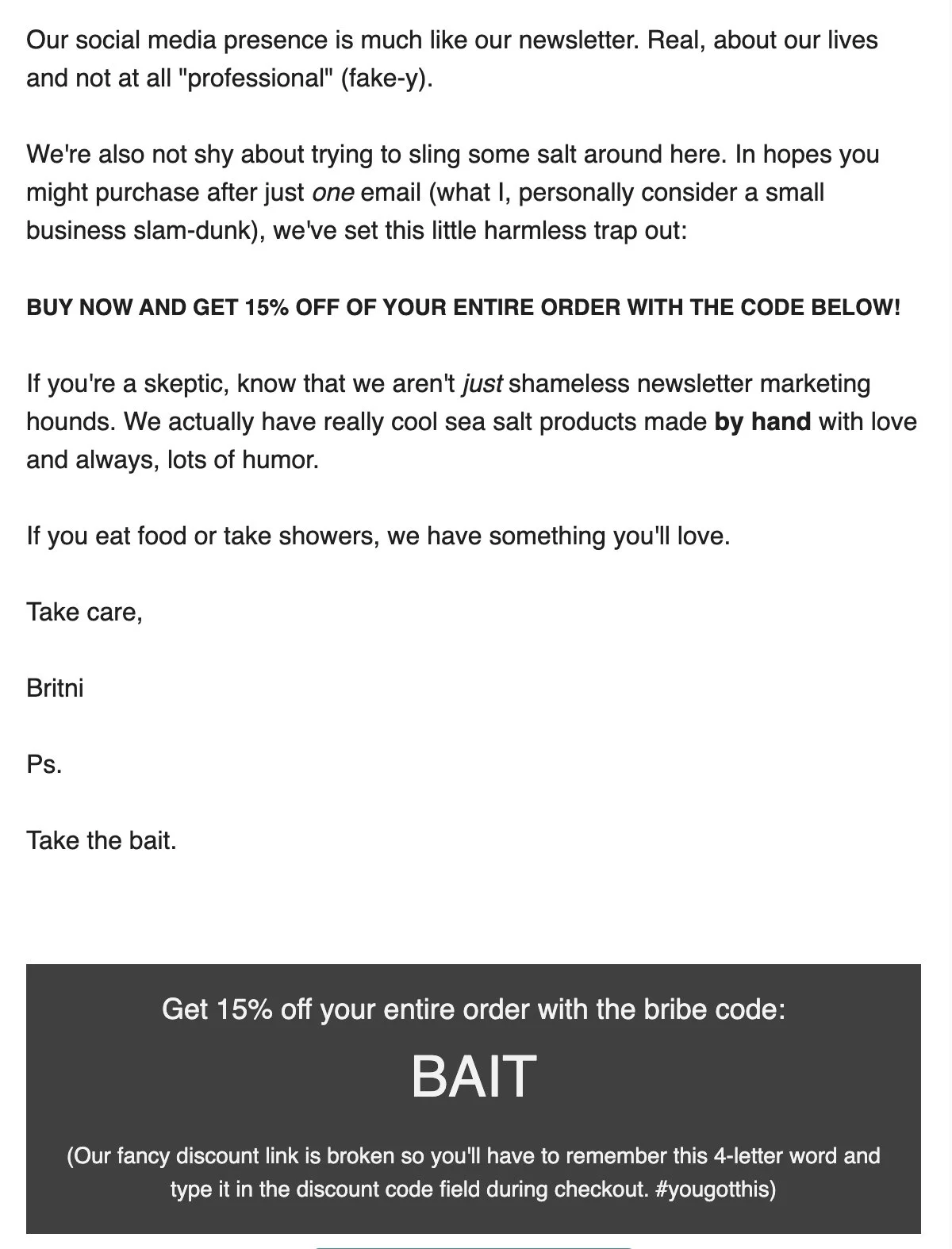
The discount code is BAIT. And because the fancy discount link is broken, you get a little assignment: remember four letters and type them in yourself.
She even drops a PS at the very bottom just to close the loop: "Take the bait."
Even the sales pitch arrives with a grin.
Then there’s the small matter of the products themselves:
“made by hand with love and always, lots of humor.”
They sell sea salt products.
But what they’re actually shipping is joy.
Until the next plot twist…
Monojoy
Storyteller, Oddly Obvious
PS: A boring commodity is hard to sell, but wrap it in enough joy, and suddenly it becomes irresistible.
Rory Sutherland explores why this kind of delightfully illogical marketing works so well in Alchemy: The Dark Art and Curious Science of Creating Magic in Brands, Business, and Life.
A picture perfect reminder not to let your marketing go to weed
Because good stories like good company: